Cunard Queen Mary 2 Transatlantic: Is It Worth It in 2026?
Cunard
Transatlantic Cruises
Luxury
Queen Mary 2 Transatlantic 2026: Is the Crossing Worth It?
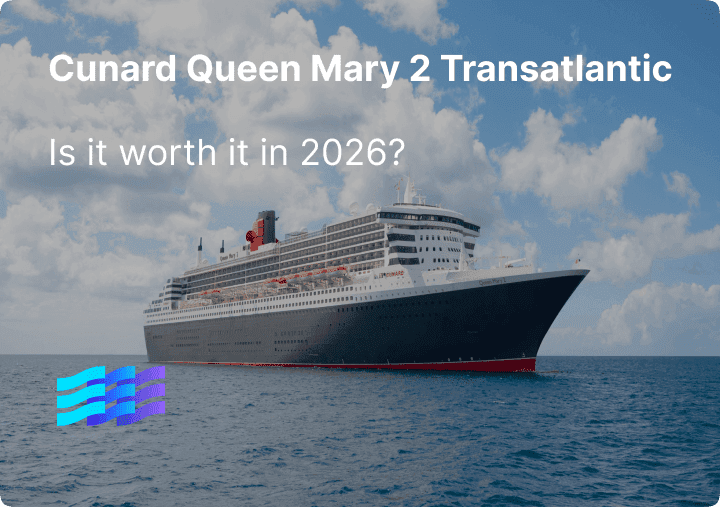
The Queen Mary 2 transatlantic crossing between New York and Southampton remains one of the most iconic ocean voyages in the world — a 7-night passage aboard the only true ocean liner still in regular service. For 2026, Cunard continues to operate multiple eastbound and westbound crossings, with fares starting from around $1,500 per person in Britannia interior cabins and climbing well above $10,000 per person for Queens Grill suites. The short answer: for the right traveler, it absolutely delivers.
Queen Mary 2 Transatlantic Overview

The QM2 has been making transatlantic crossings since her maiden voyage in 2004, and she was purpose-built for the North Atlantic — not retrofitted like most cruise ships. Her hull is deeper, her stabilizers are more powerful, and her structure is reinforced to handle the kind of open-ocean swells that would make a standard Caribbean ship miserable at speed.
The standard New York–Southampton crossing takes seven nights at sea, with no port stops. That's the point. Unlike a cruise — which is organized around destinations — the QM2 crossing is organized around the voyage itself. Days at sea are the product, and Cunard fills them with lectures, ballroom dancing, visits to the only planetarium at sea, afternoon tea, and Gala Evenings.
For 2026, Cunard has scheduled multiple transatlantic crossings, with departures from Southampton and New York's Brooklyn Cruise Terminal (Pier 12). Peak season sailings run from May through October, while shoulder-season crossings are available in April and November.
Pro Tip: If you're combining the crossing with a European trip, the QM2 can serve as your transatlantic transport — book a one-way crossing eastbound in spring, spend time in the UK or Europe, and fly home. It reframes the fare as a hotel + transportation cost rather than a pure luxury splurge.
Queen Mary 2 Cabin Classes and Pricing
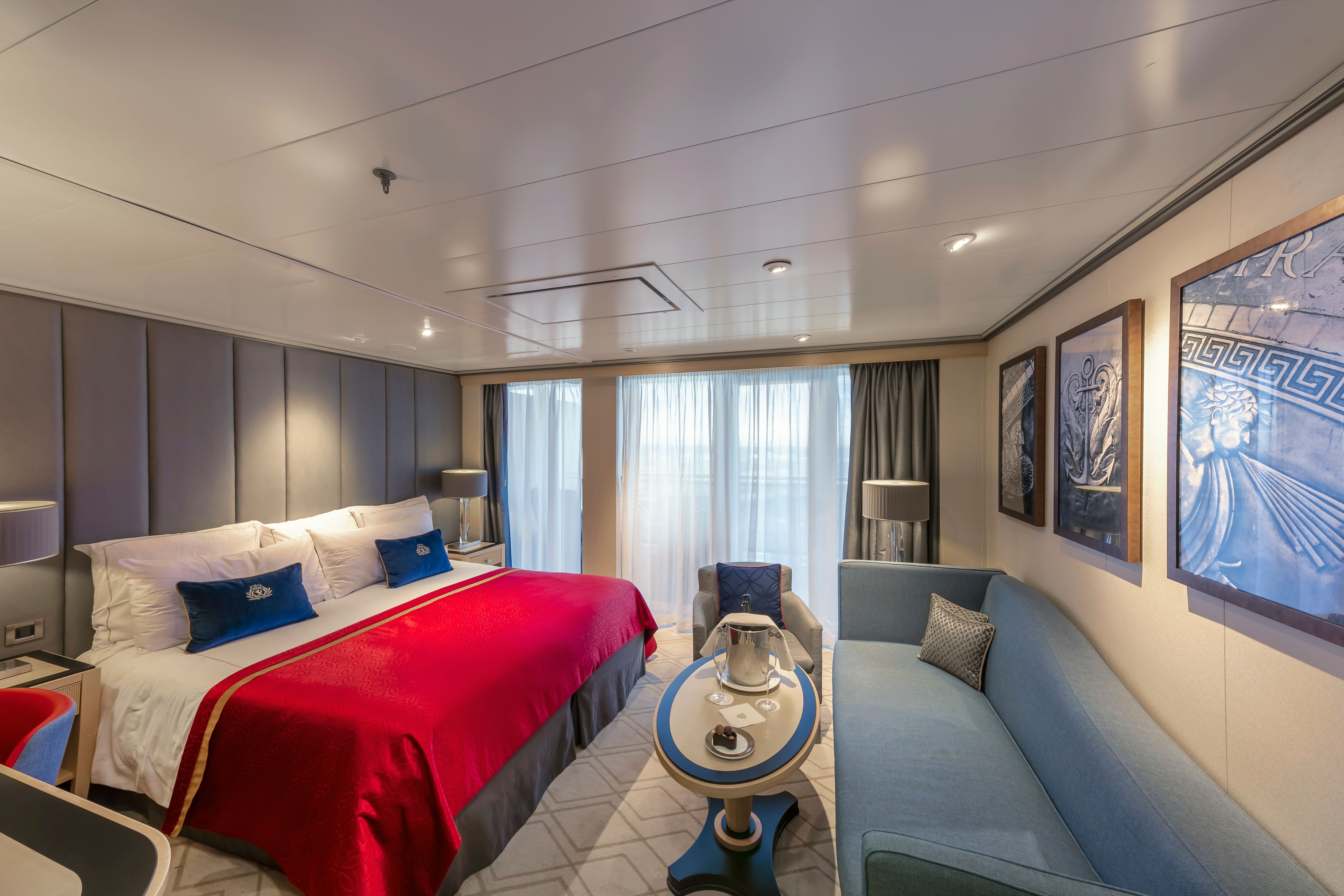
The QM2 operates a strict class system that affects more than just your cabin — it determines which restaurant you dine in every night, which is a meaningful distinction.
| Cabin Class | Restaurant Assignment | Approx. Fare (7-Night Crossing) | Key Perks |
|---|---|---|---|
| Britannia Interior | Britannia Restaurant (assigned seating) | From ~$1,500 pp | Access to all public areas |
| Britannia Oceanview | Britannia Restaurant | From ~$2,000 pp | Natural light, larger cabins |
| Britannia Balcony | Britannia Restaurant | From ~$2,800 pp | Private balcony, upgraded amenities |
| Britannia Club | Britannia Club (open seating) | From ~$3,500 pp | Flexible dining times |
| Princess Grill Suite | Princess Grill Restaurant | From ~$5,000 pp | Dedicated Grill dining, exclusive Grill venues, enhanced in-suite amenities |
| Queens Grill Suite | Queens Grill Restaurant | From ~$8,000+ pp | Largest suites, top-tier service, in-suite dining |
Fares are approximate, per person based on double occupancy, and are accurate as of July 2026. Prices vary by sailing date, cabin availability, promotions, and booking window.
Britannia Class covers the majority of passengers. Cabins are well-appointed with plush royal blue soft furnishings, upholstered seating, and ample storage — even the interior cabins feel less claustrophobic than equivalents on mass-market ships. However, Britannia passengers dine in two assigned seatings (6:00 PM or 8:30 PM), which some find restrictive over seven nights.
Britannia Club is the sweet spot for value-conscious travelers who want dining flexibility without the full Grill suite price. You get the same Britannia cabin category but with open-seating dining in a quieter section of the restaurant.
Princess Grill and Queens Grill passengers occupy a ship-within-a-ship experience. The Queens Grill restaurant is consistently cited as one of the finest dining rooms at sea, with a menu that changes daily and tableside service. Suite guests also have exclusive access to the Grill Suites Terrace — a private outdoor deck with dedicated bar service.
Pro Tip: For cabin selection within Britannia class, decks 4 and 5 midship offer the smoothest ride in rough North Atlantic conditions. Avoid the very forward or aft cabins if you're prone to motion sensitivity — the QM2 is stable by ocean liner standards, but the North Atlantic is not the Caribbean.
For more guidance on choosing the right cabin category for your travel style, see our guide on how to choose a room on a cruise ship.
What Makes a Crossing Different From a Cruise
This distinction matters enormously when evaluating whether the QM2 is "worth it" — because you're not buying a cruise. You're buying a crossing.
A cruise is destination-led: the ship is the transport, the ports are the product. A crossing is the inverse. Seven consecutive sea days means no port excursions, no tender boats, no shore-side logistics. The ship is the destination entirely.
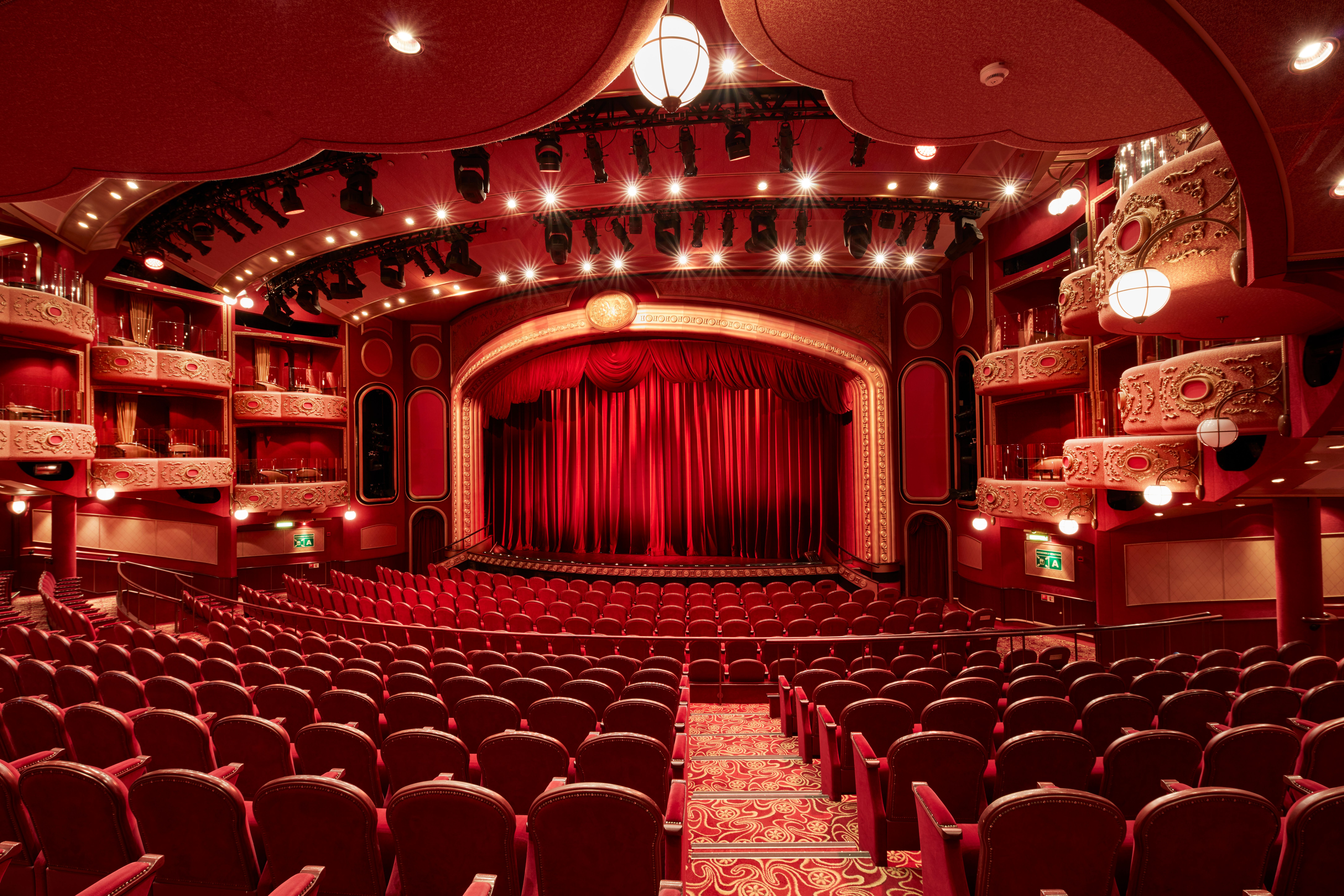
This creates a fundamentally different rhythm. Mornings on the QM2 might involve a lecture in the Royal Court Theatre — the ship has an active program of guest speakers including authors, scientists, and historians. Afternoons drift between Mareel Wellness & Beauty, the deck promenade (a full circuit is one-third of a mile), the bookshop, or the Chart Room bar. Evenings involve getting dressed.
That last point deserves emphasis. The QM2 holds at least two formal nights per crossing, and the dress code is genuinely observed. Black tie is common; morning suits appear. Passengers who've described the experience on community forums frequently cite formal nights as a highlight — the collective ritual of dressing for dinner gives the crossing a sense of occasion that seven nights in jeans simply can't replicate.
The QM2 is home to Illuminations, the only planetarium at sea. This unique venue also doubles as a lecture hall and cinema, with planetarium shows included in the fare.
Pro Tip: Pack your formal wear in your carry-on or personal item rather than checked luggage. Luggage occasionally arrives at your cabin several hours after boarding, and you don't want to scramble for a tuxedo on night one.
Onboard Dining and Entertainment
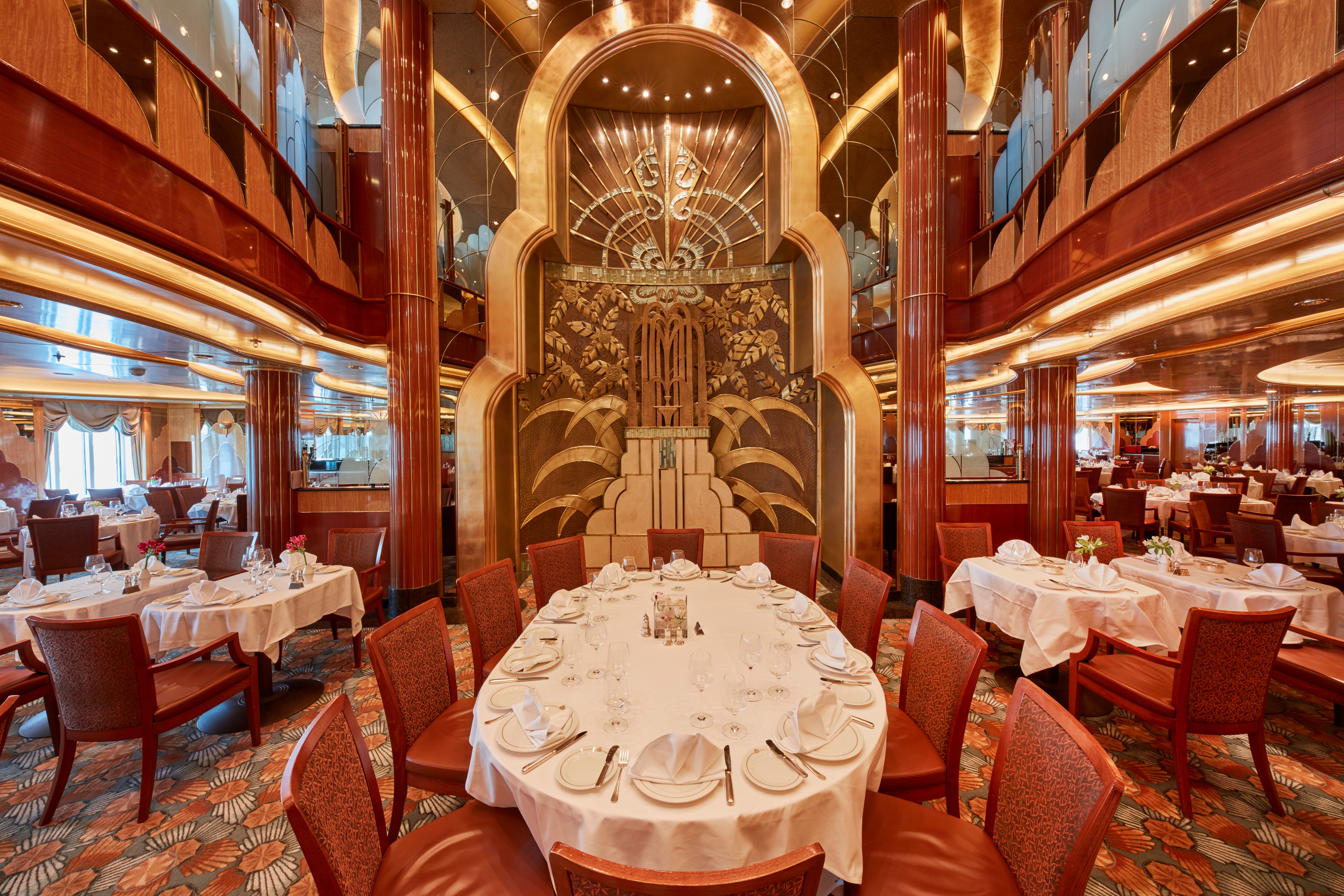
Dining on the QM2 is stratified by cabin class, but the overall food quality across all levels is high by cruise industry standards.
Britannia Restaurant seats roughly 1,350 passengers across two levels under a dramatic two-story ceiling. The menu is classic European with contemporary touches — expect dishes like lobster bisque, beef Wellington, and a rotating selection of regional specialties. Quality is consistent; presentation is formal.
The Verandah is the ship's specialty restaurant, serving French cuisine in a bright, conservatory-style space. Covers run approximately $45–$55 per person for dinner, and it books up quickly — reservations are recommended as soon as you board.
King's Court is the casual buffet, but it transforms at dinner into themed specialty areas: a Carvery, an Asian section, and a Chef's Galley option. It's more polished than a typical buffet operation.
The Golden Lion Pub serves British pub classics — fish and chips, pies, curry — at lunch, and is a social hub throughout the day. No additional charge for pub food at lunch.
On the entertainment side, the Royal Court Theatre hosts West End–caliber productions most evenings, with rotating programs across the seven nights. The QM2 also maintains a dedicated ballroom — the Queens Room — with daily dance classes and nightly dancing. This is not a token gesture; the dance floor is substantial and the instructors are professional.
The Commodore Club, perched at the bow on Deck 9, offers panoramic forward views and is the best spot on the ship for watching the ocean at speed. It becomes a quiet reading room by day and a cocktail bar by evening.
Who Is the QM2 Transatlantic Best For?
The crossing is not for everyone, and being honest about that is more useful than overselling it.
Best fit:
- Travelers who genuinely enjoy sea days and self-directed downtime
- Couples looking for a romantic, occasion-worthy voyage
- Solo travelers — the QM2 has single cabins (Britannia Single category) and a genuine social culture built around the ballroom and public spaces
- Anyone combining European travel with the crossing as a one-way transport option
- Readers, intellectuals, and anyone who finds the lecture program appealing
- Honeymooners seeking something genuinely different (see our best honeymoon cruises guide for more options)
Less ideal for:
- Families with young children seeking entertainment-heavy programming
- Travelers who need port stops to feel engaged
- Anyone who gets seasick easily — the North Atlantic in November is a different proposition than in June
- Budget travelers expecting Caribbean-level value per dollar
The demographic skews older and international — a significant proportion of passengers are British, traveling in both directions. The atmosphere is civilized rather than festive.
Eastbound vs. Westbound: Which Direction to Book?
The direction of your crossing affects more than just your arrival city — it influences pricing, weather, jet lag, and the social atmosphere onboard.
| Factor | Eastbound (New York → Southampton) | Westbound (Southampton → New York) |
|---|---|---|
| Typical Duration | 7 nights | 7 nights |
| Jet Lag Impact | Gain 5 hours (easier adjustment) | Lose 5 hours (harder adjustment) |
| Prevailing Weather | Varies by season and forecast | Varies by season and forecast |
| Pricing Trend | Often slightly lower | Slightly higher demand from UK market |
| Arrival Experience | Southampton → London by train (~80 min) | New York — arrive at Brooklyn Cruise Terminal (Pier 12) |
| Best Pairing | Start a European trip | End a European trip |
Eastbound crossings tend to be slightly more affordable and are the logical choice if you're planning to spend time in the UK or Europe after the voyage. Southampton Central railway station, a short taxi ride from the cruise terminals, offers frequent direct rail services to London Waterloo, making onward travel convenient.
Westbound crossings arrive at New York's Brooklyn Cruise Terminal (Pier 12), offering memorable views of New York Harbor on approach—arguably one of the great arrival experiences in travel. Coming into New York by sea, with the skyline emerging from the morning mist, is something no airport arrival can replicate.
Pro Tip: For the westbound crossing, book a cabin on the starboard side (right side facing forward) for the best views of the Manhattan skyline on arrival morning. Set an alarm — the ship typically approaches New York in the early morning hours.
For travelers considering other transatlantic options, our best transatlantic cruises guide covers alternatives including repositioning sailings that can offer significantly lower per-night fares.
How to Book the Best Value QM2 Fares in 2026

Cunard's pricing structure rewards early bookers and last-minute flexibility in different ways.
Book early for: peak summer crossings (June–August), specific cabin categories like Britannia Club, and any Queens Grill suite. These sell out months in advance, and early booking rates are often the lowest available.
Watch for late availability on: shoulder season crossings (April, May, September, October, November). Late Saver fares may become available on select sailings within 90 days of departure, particularly in Britannia Interior and Oceanview categories, although availability is limited and stateroom assignments are determined by Cunard.
One-way vs. round-trip: Cunard prices one-way crossings individually, which makes the math straightforward if you're only going in one direction. Round-trip fares (crossing + return flight, or two crossings) are sometimes bundled with air credit packages.
What's included in the base fare:
- All main dining (Britannia, Britannia Club, Princess Grill, or Queens Grill based on cabin class)
- Entertainment, lectures, and planetarium shows
- Access to all public spaces, including the fitness center (spa treatments at Mareel Wellness & Beauty are extra)
- Room service (standard items)
- Port taxes and fees
What costs extra:
- Drinks (no default beverage package included; wine and cocktails are priced individually)
- The Verandah specialty restaurant
- Spa treatments
- Wi-Fi (packages available; satellite speeds are functional but not fast)
- Hotel and dining service charges (additional charges apply)
Pro Tip: Cunard's "Early Saver" fares lock in the lowest rates but restrict cabin selection to a category guarantee — you won't choose your specific cabin. If location matters to you (midship for stability, specific deck for noise levels), pay the slight premium for a "Select" fare that allows cabin choice.
For more on timing your booking for maximum value, our best time to book a cruise guide applies broadly to premium lines like Cunard.
Key Takeaways
- The QM2 transatlantic crossing is a 7-night, all-sea-day voyage — it's a crossing, not a cruise, and that distinction shapes the entire experience.
- Cabin class determines your restaurant, your service level, and to a meaningful degree, your social world onboard. Britannia Club is the best value upgrade for flexible dining.
- Fares range from approximately $1,500 per person (Britannia interior) to $8,000+ per person (Queens Grill suite) for a 7-night crossing.
- Eastbound crossings tend to be slightly more affordable; westbound arrivals into New York offer one of the great arrival experiences in modern travel.
- The crossing is best suited to travelers who enjoy sea days, appreciate formal occasions, and value the voyage itself as the destination.
Final Verdict: Is the QM2 Transatlantic Worth It in 2026?
For the right traveler, the Queen Mary 2 transatlantic crossing is not just worth it — it's irreplaceable. There is no other way to cross the Atlantic with this combination of space, history, formality, and genuine ocean liner engineering. The ship was built for this route, and it shows in everything from the hull's deep draft to the ballroom's sprung dance floor.
The honest caveat: seven consecutive sea days demands a particular temperament. If you need external stimulation to stay engaged, the crossing will feel long. If you find genuine pleasure in reading, conversation, dancing, lectures, and the spectacle of the open North Atlantic, seven days will feel exactly right.
At Britannia level, the per-night cost is competitive with a good European hotel — and it includes meals, entertainment, and transport across an ocean. At Queens Grill level, you're paying for one of the finest dining and suite experiences afloat. Both can be justified depending on what you're comparing them to.
The 2026 season offers a full schedule of crossings across all months. For travelers who've been considering it for years, this is the year to stop considering.
Frequently Asked Questions
Q: How long does the Queen Mary 2 transatlantic crossing take?
The standard QM2 transatlantic crossing takes seven nights between New York's Brooklyn Cruise Terminal (Pier 12) and Southampton. The entire voyage is spent at sea, with no port stops—a defining characteristic of the experience.
Q: What is included in the Queen Mary 2 transatlantic fare?
The base fare includes all main dining (in the restaurant corresponding to your cabin class), onboard entertainment including theatre productions, lectures, and planetarium shows, access to all public spaces, and standard room service. Drinks, spa treatments, specialty dining at The Verandah, Wi-Fi packages, and hotel and dining service charges are charged separately.
Q: Is the Queen Mary 2 transatlantic crossing rough?
The QM2 was purpose-built as an ocean liner for the North Atlantic and is significantly more stable than standard cruise ships in open-ocean conditions. However, the North Atlantic is genuinely unpredictable — summer crossings (June–August) are typically calmer, while November and December crossings can encounter significant swells. Travelers with motion sensitivity should consider midship cabins on lower decks and consult our best motion sickness medicine for cruises guide.
Q: What is the dress code on the Queen Mary 2 transatlantic crossing?
The QM2 maintains a distinctive evening dress code, with at least two Gala Evenings on a typical 7-night crossing. After 6:00 p.m., Smart Attire or Gala Evening dress is expected in most bars, restaurants, and entertainment venues. During the day, casual attire is appropriate in most areas. The dress code is widely observed and contributes significantly to the ship's distinctive atmosphere.
Q: Can I do a one-way Queen Mary 2 crossing?
Yes — Cunard prices one-way crossings individually, making it straightforward to sail eastbound to Southampton and fly home, or fly to London and sail westbound to New York. Many travelers use the one-way crossing as a premium transport option combined with European travel, effectively treating the fare as hotel plus transatlantic flight costs combined.
Q: Is the Queen Mary 2 transatlantic crossing good for solo travelers?
The QM2 is one of the better ships for solo travelers in the premium segment. Cunard offers dedicated Britannia Single cabins (with characteristic circular portholes) at single-occupancy rates without the full double-occupancy single supplement. The ballroom culture, organized social events, and lecture programs create genuine opportunities for meeting fellow passengers — more so than on typical resort-style cruise ships.
Fast Facts
- Best For: Couples, solo travelers, and intellectually curious adults who enjoy sea days, formal occasions, and the voyage as the destination
- Price Range: From approximately $1,500 per person (Britannia interior) to $8,000+ per person (Queens Grill suite) for a 7-night crossing
- Best Time to Book: 6–12 months ahead for peak summer sailings; 60–90 days out for potential late-availability discounts on shoulder-season crossings
- Best Crossing Direction: Westbound for the Manhattan arrival experience; eastbound for slightly lower fares and easier jet lag adjustment
- Top Cabin Pick: Britannia Club for value-focused travelers; Queens Grill suite for a full luxury ocean liner experience
- What's Included: All main dining, entertainment, lectures, planetarium, public spaces
- What's Extra: Drinks, spa treatments, The Verandah specialty dining, Wi-Fi, and hotel and dining service charges.
- Sailing Route: New York's Brooklyn Cruise Terminal (Pier 12) ↔ Southampton, England — seven nights at sea